
KS3 English Online Tutoring – UK (Years 7–9) with Qualified Best Teachers
UK • KS3 English • Years 7–9
When children move from primary school into Year 7, English suddenly feels more serious. Texts are longer, teachers expect stronger writing, and homework takes more time. Many UK parents start searching for calm, reliable help when they see comments like “needs more detail” or “lacks explanation” on reports. Our 1-to-1 online KS3 English support is built for real families with busy evenings. Lessons happen live on screen with a friendly tutor who knows the UK curriculum and understands how secondary students think. We keep the steps small: read the question, choose useful evidence, build clear sentences and check spelling and punctuation. Each child follows a simple plan that fits their school topics, ability level and future GCSE aims. Because sessions are personal, shy students can ask questions without feeling judged, and confident students can be stretched further. Parents receive short updates after class, so they know exactly what was covered and how things are going. No travel, no big groups — just focused time that slowly turns English from a stressful subject into something manageable and even enjoyable.
- Reading, writing and analysis for Years 7–9
- Simple methods for longer answers and timed tasks
- Evening and weekend lessons across the UK


⭐ KS3 English Struggles We See in UK Classrooms
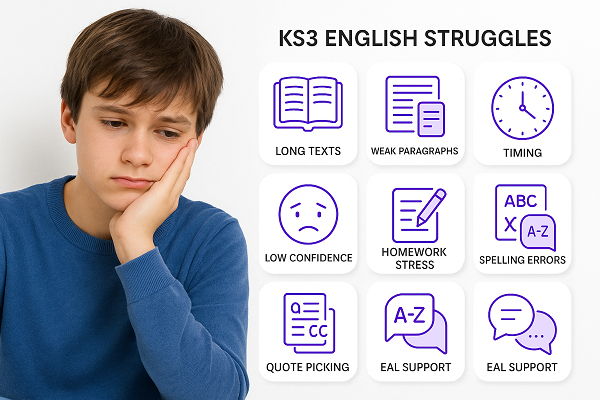
In lower secondary years, many students quietly fall behind in English. They might be hard-working but still feel lost when they face longer passages, tricky questions and strict marking. Parents often tell us, “They read the book, but the marks are still low and we don’t know why.” Common issues include slow reading speed, weak paragraph structure and trouble turning ideas into full, clear sentences. Some pupils copy model answers without understanding the steps. Others rush and write very little because they are scared of “getting it wrong”. Spelling, punctuation and grammar marks also start to matter more, and small gaps from primary school can drag scores down. Timed assessments add extra pressure, especially when students have not yet learned how to plan answers quickly. Our job is to turn all of this into small, fixable problems. We use simple language, lots of examples and plenty of guided practice so children can see what a good answer looks like and how to build one themselves, slowly growing skills for later GCSE English.
Long Passages Feel Heavy
Struggles to keep track of meaning when texts are dense or unfamiliar.
“I Don’t Know What to Say”
Knows the story but freezes when asked to explain or analyse in their own words.
Messy Paragraphs
Writes in one long block or very short bits without a clear start, middle and end.
Weak Use of Quotes
Finds it hard to choose short, useful lines and link them to the main idea.
Spelling & Punctuation Slips
Good ideas, but marks drop because of repeated small errors in basic accuracy.
Timing in Assessments
Spends too long on early tasks and rushes closing questions in tests.
Low Confidence Reading Aloud
Feels shy when asked to read or share answers in front of the class.
Homework Takes Hours
Simple tasks turn into long evenings because instructions feel confusing.
Jump Towards GCSE
Family worries that current gaps will grow once GCSE English begins.
EAL & New to UK Schools
Learner understands ideas but needs extra language support to show them.
Made for UK KS3 students – small, steady fixes that turn English into a subject they can manage.
What We Cover in KS3 English (Years 7–9)
Our lessons follow the skills that matter most in UK secondary English, not just a random mix of worksheets. For Year 7, we focus on settling into new expectations: reading shorter extracts carefully, using clear sentences and learning how to answer “how” and “why” questions step by step. In Year 8, we build depth by adding stronger phrases, more detailed comments and better linking between ideas. By Year 9, many students are starting work that looks close to GCSE, so we practice planning longer answers, discussing language choices and thinking about structure and effect in simple words. Across all three years, we blend fiction and non-fiction reading, descriptive and narrative writing, and real-life skills such as organising thoughts and checking work for accuracy. We can match school schemes when parents share topics, or use our own structured route if that feels easier. The aim is always the same: clear understanding, stronger writing and a calm path towards future exams without sudden shocks.
Year 7 – Settling In
- Reading short extracts and finding key ideas
- Building clear, simple sentences with detail
- Basic analysis of language and effect
- Short paragraphs with a clear main point
Year 8 – Building Skills
- Longer texts and more demanding questions
- Developing paragraphs with linked evidence
- Improving vocabulary and connectives
- Stronger control of spelling and punctuation
Year 9 – Pre-GCSE Steps
- Planning for exam-style reading questions
- Practicing longer analytical answers
- Descriptive and narrative writing practice
- Sharpening grammar and accuracy for GCSE
Aligned with common UK secondary English schemes, while still tailored to each school and student.
How Our Online KS3 English Lessons Run
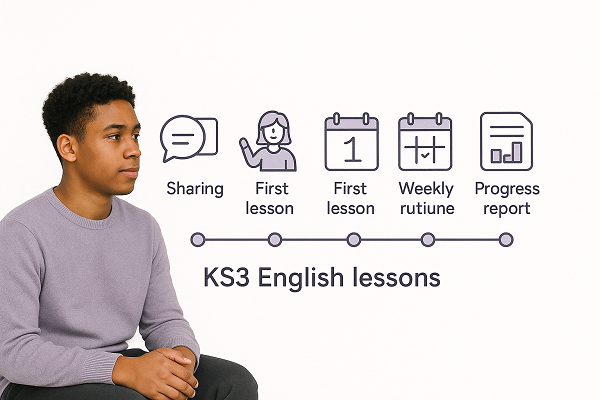
We keep the process simple so parents and students know exactly what to expect. First, we speak to you about school, year group, recent reports and what feels hardest right now. We then ask to see a piece of writing or a test paper so the tutor can spot patterns in detail, structure and timing. During the first lesson, the tutor introduces themselves, checks how the student feels about English and sets a short, gentle task. From there we agree clear goals, such as stronger reading answers, better paragraphs or more secure spelling and punctuation. Weekly sessions follow a steady pattern: a short warm-up, teaching of one main idea, guided practice and a quick recap. Homework is light and always linked to class work, not random sheets found online. After each lesson, parents receive a short note in plain language, not jargon. Every few weeks, we look at progress together and adjust the plan if school topics or needs change, so support stays relevant and useful.
1) Parent Chat
Quick call to understand year, school, worries and goals.
2) Share School Work
You send a sample of writing or a recent English test.
3) First Lesson Check
Tutor meets your child and does a gentle skills check.
4) Simple Plan
Agree clear targets such as reading, writing or timing.
5) Weekly Routine
Same time each week so English becomes a steady habit.
6) Reports & Next Steps
Short notes for parents plus regular progress reviews.
KS3 English Services for UK Families (All 1-to-1)
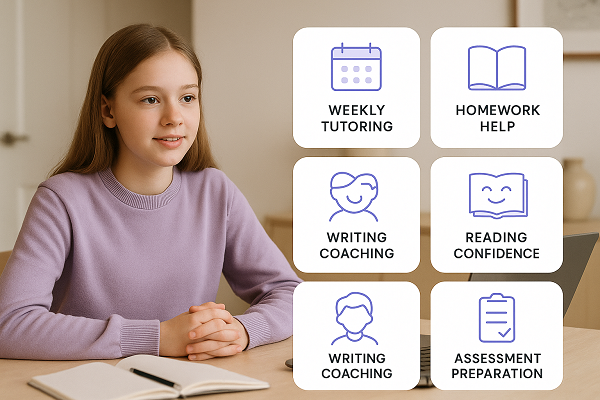
Everything we offer for KS3 English is 1-to-1, because every child reaches Years 7–9 with a different history. Some pupils need a gentle boost to stay on track, while others need firm support after a difficult report. Our tutors adjust the pace, examples and level of challenge in real time, something that is hard to do in a busy group. We can focus on reading skills, writing skills or a mix of both, depending on what school is asking for. Many families use us as long-term weekly support so English never becomes a crisis again. Others choose short blocks around key tests or parent evenings. We also help students who learn English as an additional language,
making sure they understand task wording and can show what they really know. Whatever the plan, sessions stay practical, calm and focused on small wins that build into bigger changes over time.
1-to-1 Weekly Tutoring
Personal lesson plan and fixed time each week.
Homework Support
Short, guided help so tasks feel clear and manageable.
Reading Confidence
Step-by-step practice with longer passages and unseen texts.
Writing & Paragraphs
Coaching on planning, structure and developing ideas.
Spelling & Grammar Focus
Targeted work on common errors to lift accuracy marks.
Assessment Preparation
Practice for school tests with clear timing routines.
⭐ Why UK Parents Trust Our KS3 English Support
Parents in the UK want more than worksheets and buzzwords. They want tutors who understand secondary English,
treat children kindly and communicate clearly with home. Our team has strong experience with KS3 and GCSE
expectations, so we know how skills should grow from Year 7 onwards. We explain in plain, friendly language and
use real examples rather than rushing through slides. Lessons happen over secure Zoom, with shared screens so
students can read, highlight and type while the tutor gives live feedback. Families appreciate that they can see
work on the screen and know what has been covered. We respect your timetable, keep to agreed slots where
possible and are honest about progress. If something is not working, we adjust. Many families stay with us as
their children move up the school because they see steady, quiet growth in confidence, effort and results.
Clear, Gentle Teaching
Small steps, simple words and lots of examples.
KS3 & GCSE Aware
Tutors who understand how work builds towards exams.
Safe Online Setup
Secure Zoom links and saved notes for each lesson.
Flexible UK Timing
After-school and weekend slots to fit busy families.
No Long Contracts
Easy to start, and simple to change if needs shift.
Honest Progress Notes
Weekly updates in normal language, not jargon.
Focus on Confidence
Encouraging shy students to speak and share ideas.
Fair 1-to-1 Cost
Clear hourly rate with no registration fees.
KS3 English Pricing – UK (Years 7–9)
First parent meeting is FREE. No sign-up fee. Monthly plans available for steady support.
We keep our prices simple so you can plan calmly. All KS3 English lessons are 1-to-1 and last 60 minutes. You
choose how many hours per week your child needs right now. Some families start with one weekly session to
reduce stress and test the fit. Others choose more regular support around key school assessments or after a
worrying report. You are never tied into a long contract, and you can adjust the plan if your timetable or
budget changes. The hourly rate stays the same for Years 7, 8 and 9, so there are no surprises as your child
moves through KS3. Every plan includes safe Zoom links, saved notes and short written feedback to parents. Our
focus is value: a calm, focused hour of expert help where your child has the tutor’s full attention.
1-to-1 Online Lesson
£15 / hour
- Personal plan for Years 7–9
- Lesson notes saved each week
Starter Meeting
Free
- Parent goals and timetable
- Simple online setup
- Start lessons this week
Included in Every Plan
No extra fees
- Secure Zoom links
- Saved class materials
- Ongoing parent support
Final quote may vary based on number of weekly lessons and any special support needs.
UK-Wide KS3 English – Online Nationwide
Because lessons are online, we can work with KS3 students in every part of the UK. Some families live in big cities with busy travel, where it is hard to fit in centres after school. Others are in smaller towns with few specialist English tutors nearby. Our model removes those barriers. Your child joins from home, logs into a secure Zoom room and works directly with their tutor on shared documents and texts. This also makes it easier to keep lessons going during bad weather, illness or transport issues. Whether you are in England, Scotland, Wales or Northern Ireland, the goal is the same: calm, regular English support that fits normal family life instead of adding more stress.
London
Evening and weekend slots for busy city families.
Manchester
Support for students across Greater Manchester and nearby towns.
Birmingham
1-to-1 online tuition for many types of secondary schools.
Leeds
Extra English help for Years 7–9 across the Leeds area.
Glasgow
Flexible online lessons for Scottish secondary learners.
Bristol
Regular support for students in Bristol and nearby towns.
All UK • Online: lessons on Zoom with saved notes after class.

Explore More UK English Support
KS3 English sits in the middle of your child’s journey. Strong foundations from earlier years and clear support for later stages make the whole path smoother. Many families have younger children who need primary help, or older ones already thinking about GCSE and A-Level. Others want to pair English with maths support so that wording in problem questions feels less scary. Our UK pages link these stages together so you can see how everything fits. You can keep tuition with one child, spread support across siblings, or adjust focus as school demands change.
UK English Tutoring – English Series
FAQ – KS3 English Tutoring in the UK
Parents often have similar questions when they look for help with secondary English. They want to know how online lessons work, what kind of homework is given and how progress will be measured. Many also ask how fast they will see change and what happens if a child is very shy or worried about reading aloud. We have collected straight, honest answers here so you can decide if this style of support fits your family. If something you are wondering is not listed, you can always send us a message and we will reply in clear, simple language.
Which years do you count as KS3?
Years 7, 8 and 9. Some pupils join at the end of Year 6 or stay into Year 10 if that feels right.
Is every lesson 1-to-1?
Yes. Each session is just your child and the tutor, so there is time for questions and feedback.
Do you follow my child’s school work?
Where possible, yes. If you share topics or homework, we link lessons to what school is doing.
How much homework will they get?
We set short, focused tasks that build on the lesson, not long sheets that create more stress.
What if my child hates reading?
We start with shorter texts, clear questions and lots of support until confidence grows.
Can you help strong students aim higher?
Yes, we stretch able learners with deeper analysis, wider reading and more advanced writing tasks.
How soon will we see progress?
Every child is different, but many families notice better effort and confidence within a few weeks.
Is Zoom safe for my child?
We use secure links, clear rules and supervised sessions to keep online lessons safe.
Can we change our lesson time?
With fair notice, we do our best to move to a new regular slot that suits you.
Do you support EAL students?
Yes. We help with task wording, vocabulary and sentence building so they can show their ideas.
How do payments work?
Payments are usually monthly based on lessons booked. We send clear details before you begin.
What happens after KS3?
If things go well, we can continue into GCSE English with a smooth, planned transition.
Ready to Support Your Child Through KS3 English?
If English has started to feel heavy for your child in Years 7–9, you do not have to wait for another report before taking action. A short, friendly conversation with us can make the next steps clear. We will listen to what is happening at school, ask about strengths as well as worries, and suggest a simple plan that fits your timetable and budget. There is no pressure to decide on the spot; you can talk it through at home and come back to us when you are ready. When you choose to start, we match your child with a tutor who understands KS3 and guides them at a gentle but steady pace. Over time, small improvements in reading, writing and confidence can
turn into better marks and a calmer attitude towards English. Click the button below or use the contact page to book your free starter meeting and see how we can help.