
KS3 Maths Online Tutoring UK – (Years 7–9) with Qualified Best Teachers
United Kingdom • KS3 Maths • Years 7–9
Key Stage 3 is the bridge between primary and GCSE, and many UK parents notice maths getting harder at this stage. Topics like negative numbers, algebra, equations, ratio, probability and more complex geometry all arrive together. Some pupils kept up in primary, but now feel lost when methods change or questions use more words than numbers. Others understand in class, yet make mistakes when working alone at home. Our one-to-one lessons are designed to make KS3 maths feel clear again. A friendly tutor explains each topic in small steps, shows neat working and asks the student to try similar questions while staying on the call. We focus on real classroom needs: homework, tests, and building a strong base for later GCSE work. Parents like that lessons are flexible after school, that we share short weekly reports, and that their child is not afraid to ask questions in a private space. Whether your child needs gentle Year 7 maths help to settle into secondary, more targeted Year 8 maths help for growing topics, or focused Year 9 maths help as GCSE approaches, this KS3 page gives a clear path. Our aim is simple: steady progress, stronger methods and calmer students who start to believe that they can handle maths at secondary level.
- Step-by-step explanations for Years 7–9 topics
- After-school and weekend UK timings
- Weekly progress updates for parents

⭐ Common KS3 Maths Problems for UK Pupils
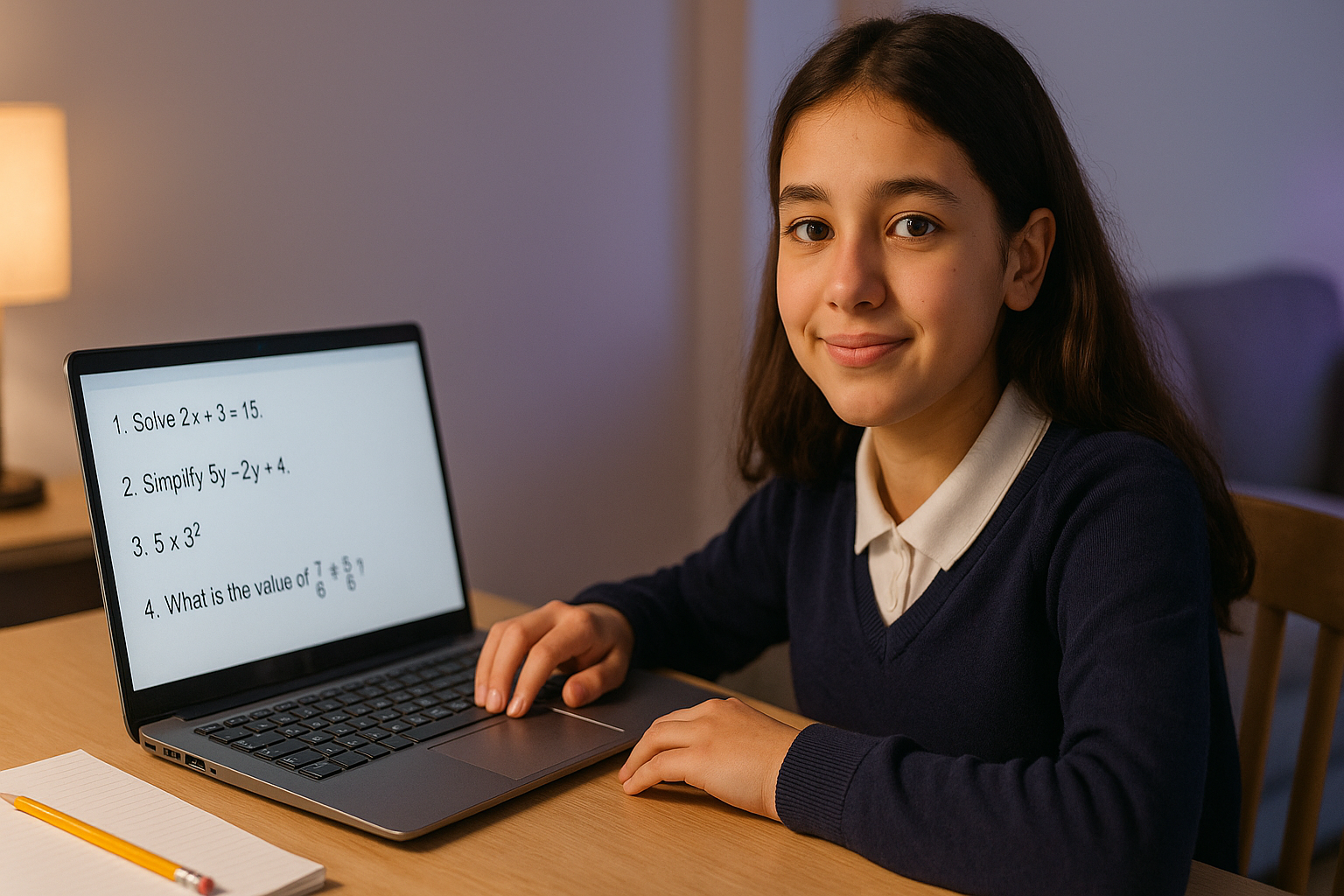
In Years 7 to 9, maths quickly moves beyond simple number work. Pupils now have to deal with directed numbers, algebra, multi-step problems and more reading inside each question. Many can copy a method in class but do not fully understand why it works, so they cannot rebuild it later. Negative numbers and algebra are common issues: students mix up signs, forget to use opposite operations, or try to jump too many steps at once. Fractions, decimals and percentages may have been fine in primary but feel more confusing when they appear inside longer questions. Ratio tasks can look like a block of text, so learners struggle to decide what to do first. Graph work can also cause stress if pupils misread scales or mix up x and y coordinates. When tests appear, some rush and make avoidable errors; others work very slowly and cannot finish. Parents see rising stress but may not know where the real gaps sit. Our KS3 lessons aim to untangle these problems. We slow the topic down, show one neat method, practise small sets of similar questions, and build routines for checking answers. Over time, pupils stop guessing and start using clear steps. That shift from guessing to knowing is what lifts both marks and confidence.
Negative Numbers
Mixing signs in sums.
Algebra Steps
Unsure how to move terms.
Equations
Forgetting opposite operations.
Fractions & Decimals
Changing between forms.
Ratio & Proportion
Hard to set up correctly.
Wordy Questions
Not sure what is being asked.
Graphs & Coordinates
Confusing axes and scales.
Angles & Shapes
Missing key rules in geometry.
Careless Errors
Losing marks on simple steps.
Test Nerves
Freezing in timed checks.
KS3 Maths Topics We Cover in the UK
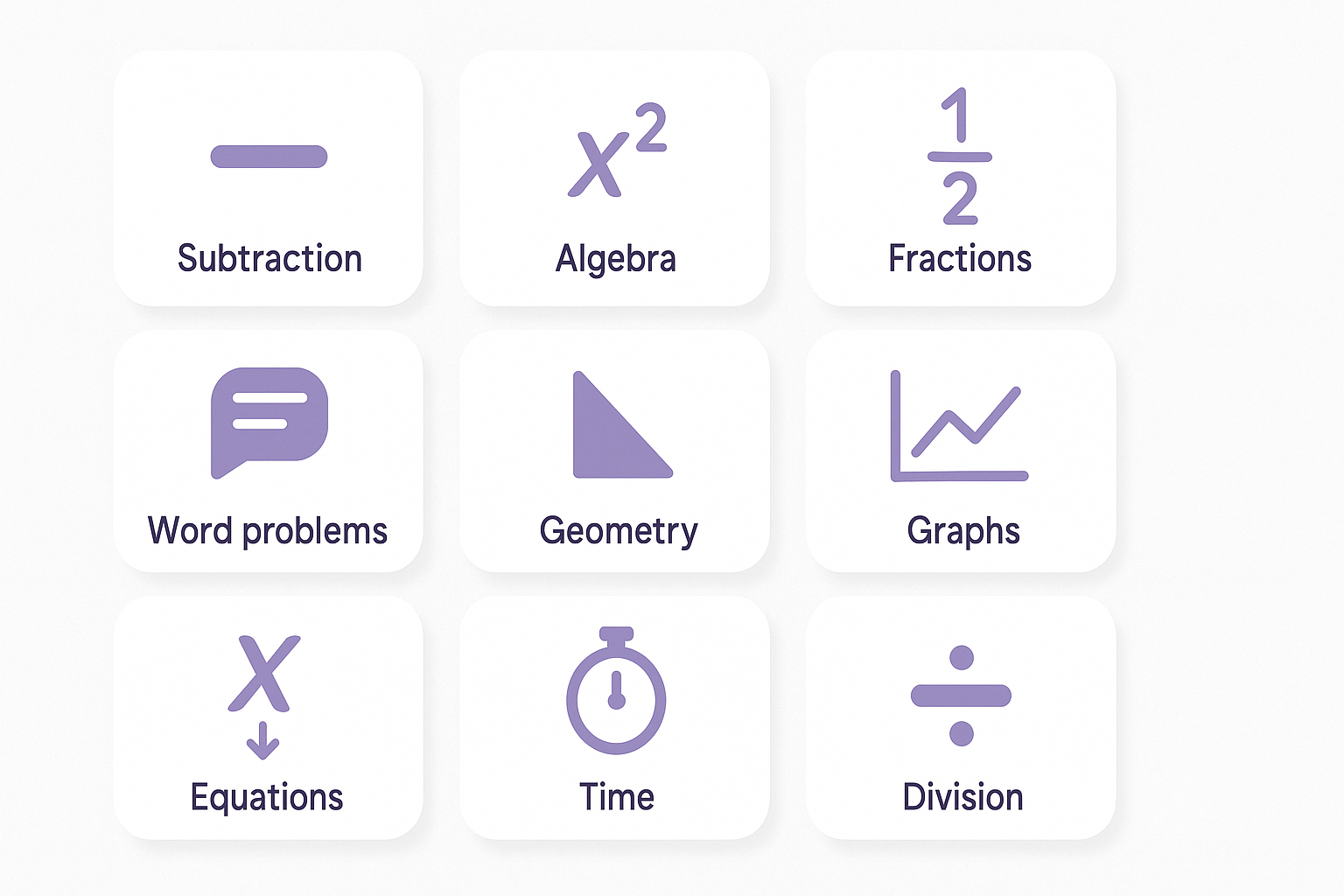
KS3 maths in the UK is built to prepare students for later GCSE success, so the topics are wide and often feel fast. Our teaching covers the full list but always starts from what each pupil needs most right now. Some learners need more time with number work to secure negative numbers, fractions and the order of operations before moving further. Others are ready to focus on algebra steps, such as simplifying expressions, solving equations and understanding sequences. Many struggle with graphs, so we practise reading coordinate pairs, choosing sensible scales and linking equations to straight-line graphs. Shape and space can also be tricky; rules for angles, triangles and polygons can be forgotten if they are not used often enough. We revisit these in a clear, visual way. Towards the end of KS3, pupils start to see more test-style questions, so we introduce structured answers and exam-style working. This is where gentle KS3 maths online support makes a big difference. Pupils can slow the pace down, go back over parts they missed in class and learn how all the pieces fit together. Over time, they see that KS3 maths is not a random mix of topics but a set of connected ideas that, once understood, make later learning easier and less stressful.
Number & Fluency
- Integers & negative numbers
- Fractions, decimals & percentages
- Powers, roots & order of operations
- Estimation & calculator checks
Algebra & Graphs
- Simplifying & expanding brackets
- Solving linear equations & inequalities
- Sequences & basic functions
- Plotting graphs & coordinates
Shape, Space & Data
- Angles, triangles & polygons
- Perimeter, area & volume
- Transformations & symmetry
- Probability & statistics basics
How Our KS3 Maths Lessons Run for UK Families
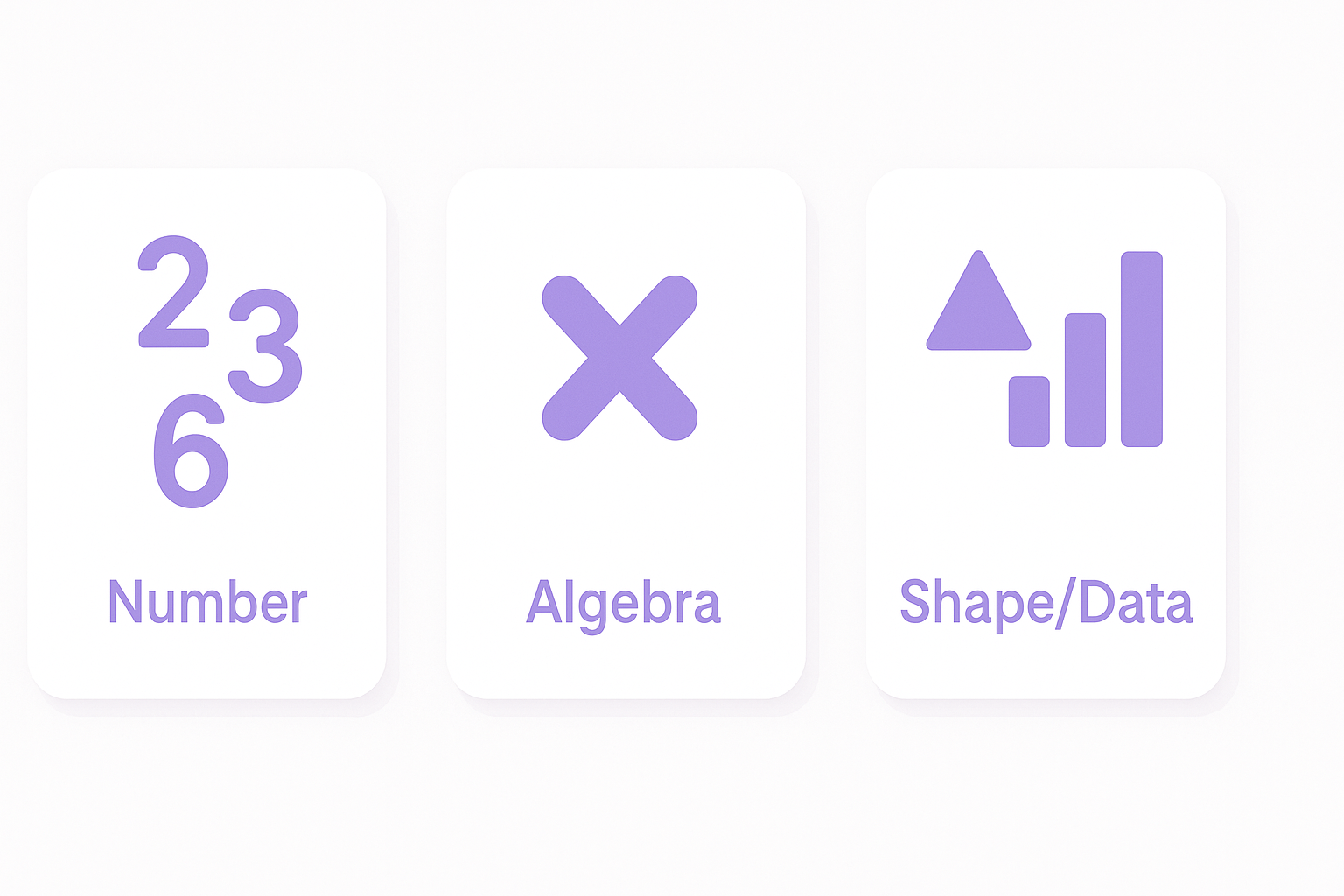
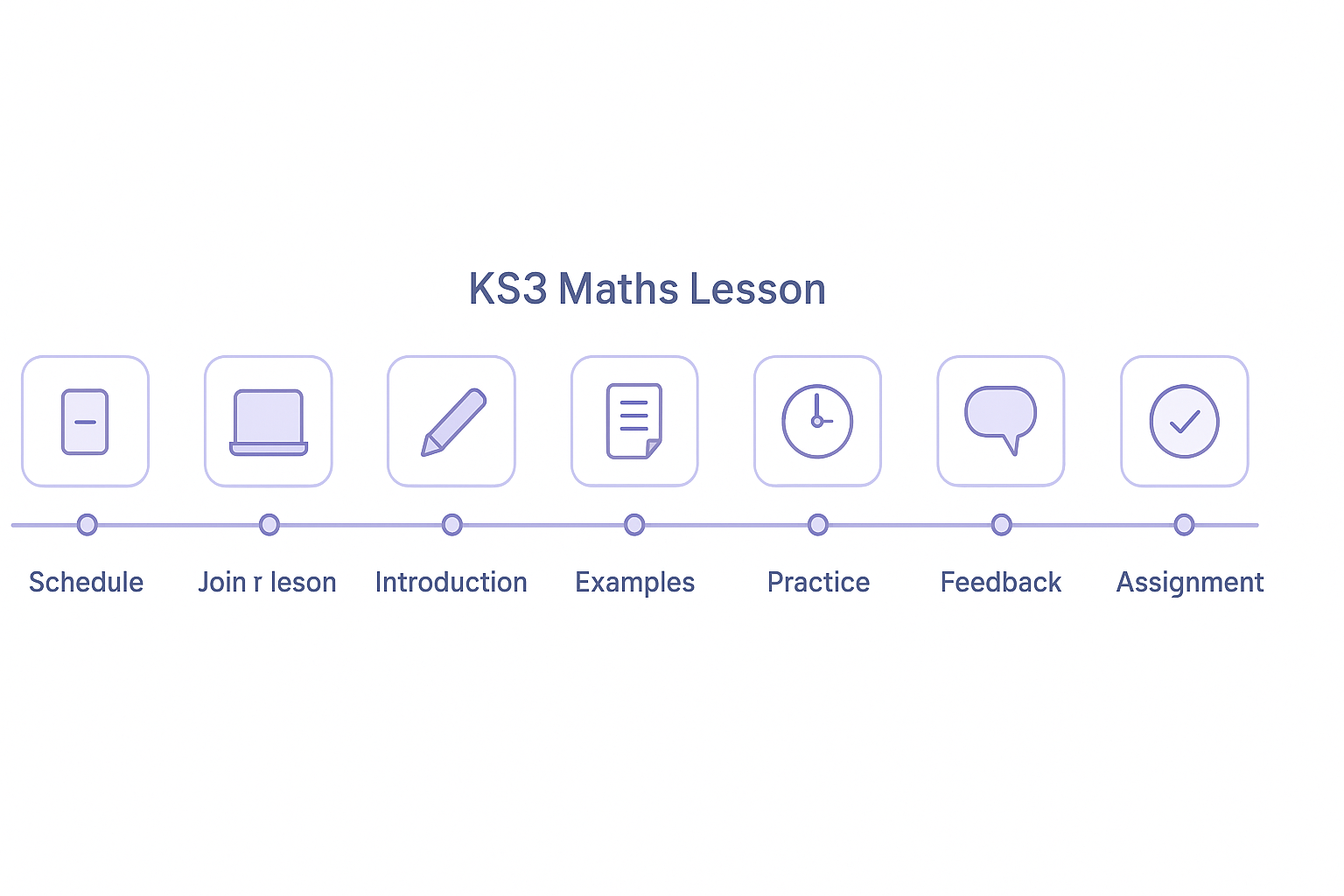
Our KS3 lessons are designed to feel organised and calm. In the first chat, parents explain what teachers have said, how recent tests went, and how their child feels about maths. This helps us plan a sensible starting point. We then do a short level check, looking at number work, algebra and problem solving so we can see strengths and weak spots. Each lesson starts with a clear aim, such as “solve one-step equations” or “read coordinates accurately”. The tutor then shows a method slowly, writing every step, and checks that the pupil understands before giving similar questions to try. During practice, the tutor watches closely, offers hints and stops to explain if the student seems unsure. Mistakes are treated as learning chances, not something to fear. Homework is small but focused, built from the same type of question so pupils can see they are getting better. After each lesson, parents receive a short message explaining what we covered, how the student managed, and what comes next. Every few weeks we step back and review progress using school feedback and our own checks. If teachers notice new issues, we adapt the plan. This steady routine means pupils know what to expect and slowly build stronger habits that support them throughout KS3 and beyond.
1) Parent Call
Talk about school and targets.
2) Setup & Login
Zoom links and schedule agreed.
3) Quick Check
Short tasks to find gaps.
4) Clear Aim
One focus for each lesson.
5) Live Teaching
Tutor models neat working.
6) Guided Practice
Student tries linked questions.
7) Fix & Explain
Go through errors calmly.
8) Light Homework
Small set to keep skills fresh.
9) Parent Update
Simple written note each week.
10) Regular Review
Plan adjusted as marks improve.
KS3 Maths Services – 1-to-1 Only
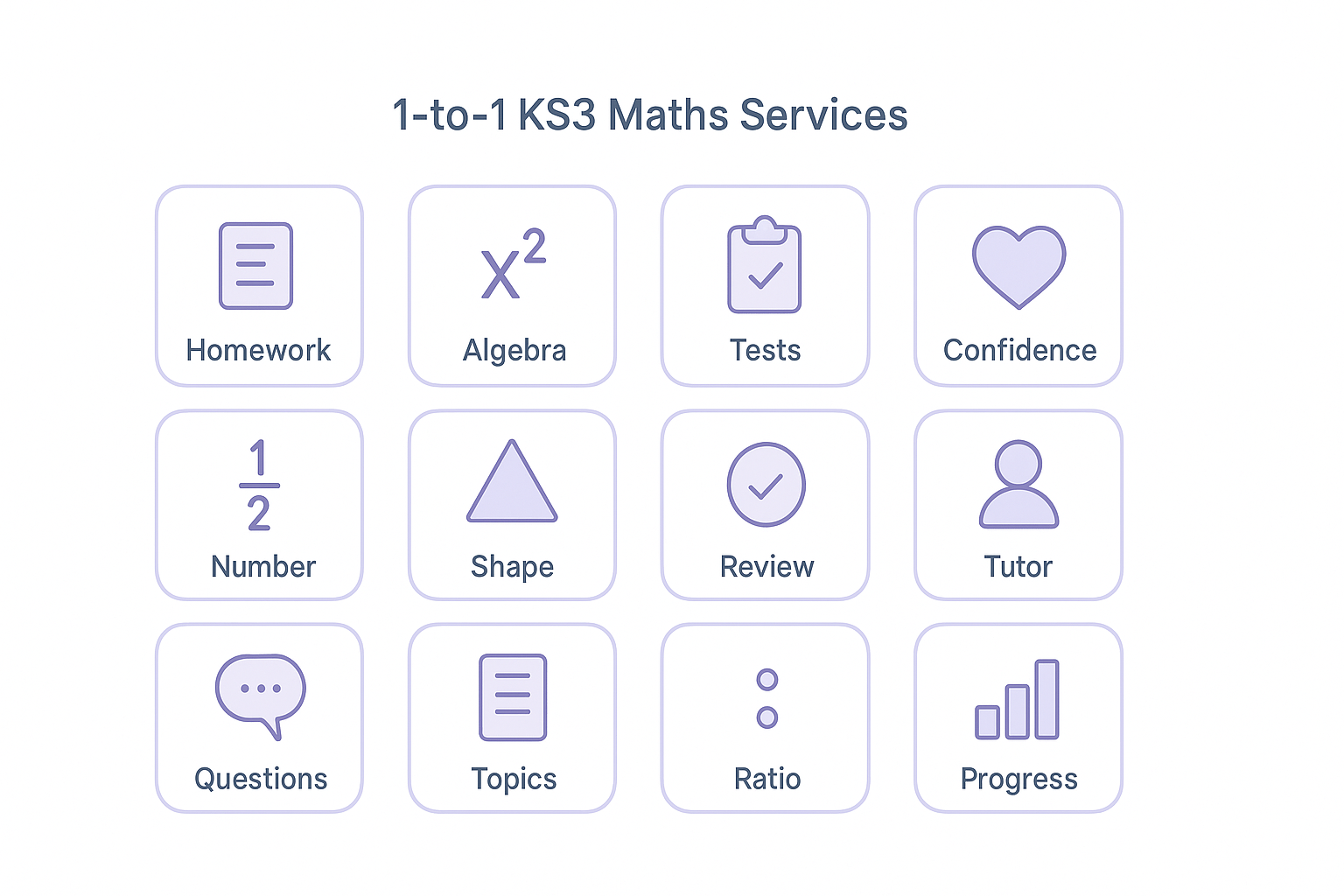
All our KS3 services are built around one-to-one time because this stage includes such a wide mix of needs. Some students only need help on a few topics, while others have gaps that go back several years. Topic catch-up sessions let us return to older work quietly without any embarrassment. Homework support focuses on questions set by school, so pupils can hand in work they understand. Algebra boost sessions guide learners through simplifying, expanding and solving in a slow, structured way. Number fluency work speeds up simple calculations so more energy is left for complex tasks. Problem solving lessons teach students to highlight key information, choose operations and check answers using common sense. When tests are near, we run short timed sets so pupils practise working under pressure. Confidence is always at the centre of everything we do; we praise effort, show students where they have improved and treat mistakes as normal steps in learning. Parents receive clear feedback from these sessions, making it easier to talk with teachers and plan ahead. Because sessions are private, pupils feel safe to say “I don’t get this” and create a more honest, useful relationship with their tutor, which is one of the strongest drivers of long-term progress.
Topic Catch-Up
Fill gaps from lessons.
Homework Support
Step-by-step guidance.
Algebra Boost
Equations and expressions.
Number Fluency
Faster, accurate basics.
Problem Solving
Break down worded tasks.
Test Preparation
Timed practice sets.
Confidence Building
Calm, friendly teaching.
Printable Practice
Extra sheets for home.
Progress Checks
Short reviews and scores.
Parent Support
Simple advice on routines.
⭐Why UK Parents Trust Our KS3 Maths Tutors
KS3 is often the time when parents start to worry about future exams, so they want a tutor who understands the bigger picture. Our team is used to working with secondary pupils and knows how KS3 content connects to later GCSE topics. This means we always keep one eye on future needs as we support current lessons. Tutors explain in a calm voice, repeat when needed, and never make students feel silly for asking basic questions. We check school topics, use similar question styles, and encourage pupils to show working in the way teachers expect. Safety online is taken seriously with secure links and clear rules for behaviour. Parents receive weekly updates in plain language so they can see what is improving and what will be tackled next. We offer evening and weekend slots to fit busy households, and try to keep the same tutor with each child to build a stable, trusting relationship. Pricing is simple, without hidden extras, so families can plan. Over time, parents see changes in both marks and attitude. Pupils become more willing to attempt new topics and less afraid of tests. Knowing that a steady, kind expert is walking alongside their child through KS3 gives many families real peace of mind.
Secondary Aware
Understand KS3 demands.
Calm Style
Patient explanations.
School Linked
Match real class topics.
Safe Online
Secure Zoom lessons.
Regular Contact
Weekly reports home.
Flexible Slots
Evenings and weekends.
Steady Progress
Small wins each week.
Clear Working
Neat, exam-style steps.
Trusted Tutors
Same teacher each time.
Open Pricing
Simple hourly rate.
KS3 Maths Pricing – UK Years 7–9
First class is FREE. One clear 1-to-1 rate for all three year groups.
Our KS3 maths pricing is kept simple so parents can focus on learning, not on worrying about changing fees. The same hourly rate applies whichever year group your child is in, so moving from Year 7 to Year 8 or Year 9 does not change the cost. You can start with one weekly session and increase if needed near tests or important school checks. The first meeting is free, giving you time to ask questions, share reports and decide if the approach suits your child. There are no joining fees, and resources such as working documents and practice questions are included. We agree times that fit around school and activities, and if your schedule changes, we will work with you to adjust where we can. Parents receive clear information on what they are paying for: private lessons focused on their child’s needs, careful planning by the tutor, and regular written updates on progress. This steady, honest structure makes it easier to commit to support over several terms, which is often what KS3 pupils need to rebuild confidence and secure methods properly before GCSE content arrives.
1-to-1 Online
£15 / hour
- Personal KS3 plan
- Practice questions and notes
Starter Meeting
Free
- Talk about school and goals
- See how lessons run
- Agree first steps
Included
No extra fee
- Zoom links and safety rules
- Saved working and resources
- Weekly parent feedback
Final cost depends only on how many lessons per week you choose.
Online KS3 Maths Support Across the UK
Because our KS3 maths lessons are online, we can support students in many different parts of the UK without travel or extra time. Some families live in big cities where local tutors have long waiting lists, while others are in smaller areas with very few specialist KS3 maths teachers. Our approach means they all access the same level of care at home. Pupils log in from a quiet space and meet their tutor at the same time each week, building a stable learning routine. This is useful for families who move school or city; the tutor stays the same even if the classroom changes. Timetables are planned around local time zones within the UK, so sessions can run after school or at weekends. Parents can join briefly at the beginning or end of lessons if they want to check how things are going. Children in London, Manchester, Birmingham, Leeds, Glasgow, Bristol and beyond all receive clear, step-by-step help with the same topics, matched to their level and school needs. Distance is no longer a barrier to good maths support. Instead, the focus can stay on the one thing that really matters: helping students feel more confident and capable with KS3 maths, wherever they live.
London
After-school lessons.
Manchester
Calm home learning.
Birmingham
Homework and tests.
Leeds
Topic catch-up.
Glasgow
Regular 1-to-1 help.
Bristol
Exam-style practice.

Explore More UK Online Tutoring – Maths - GTS
KS3 sits in the middle of a larger learning journey, so many families look for joined-up support in more than one subject or stage. This section links you directly to other key pages so you can explore options without having to search again. If you have younger children, you can check our primary maths and English routes, which focus on early skills that feed into later success. For older pupils, our GCSE and A-Level subject pages explain how exam-style practice and deeper understanding are built. Linking KS3 maths with English support can help students in worded questions, where reading and problem solving meet. By keeping all these routes connected in one place, we make it easier for families to adjust help as school demands change. A child might start here needing KS3 confidence, then later move into exam-focused support. Siblings might follow different paths at the same time. Whatever your family mix, these links let you plan ahead and move between subjects smoothly, building a wider support network around your children as they grow through the UK system.
Primary Maths Online Tutoring – UK
FAQ – KS3 Maths Tutoring in the UK
Parents often have detailed questions before starting extra maths help at KS3 level, and this is completely normal. You may want to know how online lessons look in practice, how homework is handled, whether progress is measured against school expectations, and how long it might take to see change. Some families worry about confidence and anxiety as much as they worry about marks. Our aim is to give honest, simple answers so you can decide if our approach is right for your child. The questions below come from real UK parents looking for KS3 maths revision and steady support across Years 7, 8 and 9. If you do not see your specific question here, you are welcome to raise it during the free starter meeting, where we can talk through your situation in more detail and explain how we would build a plan that suits your child and your timetable.
Do you teach all of Years 7–9?
Yes, we support the full KS3 range.
Are lessons 1-to-1?
Every session is one-to-one only.
How long is each lesson?
Most sessions run for 60 minutes.
Do you set homework?
We give small linked practice tasks.
Will you follow school topics?
Yes, we match class work where possible.
Can you help with tests?
We use past-style questions and timings.
Is online learning safe?
We use secure links and clear rules.
Do parents get updates?
Weekly written feedback is shared.
How quickly will progress show?
You usually see small wins within weeks.
What does my child need at home?
A quiet space, device and notebook.
Can times change later?
We try to adjust if slots are free.
How do we begin?
Book a free meeting to discuss needs.
Ready to Steady KS3 Maths Before GCSE?
If you feel your child is slipping in confidence or marks during KS3, now is a good time to put extra support in place. Years 7 to 9 are when the building blocks for later exams are laid down, so small changes now can prevent bigger problems later. A free starter meeting gives you the chance to explain what is happening in school, share reports and let us know how your child feels about maths. We will suggest a clear, realistic plan that fits your routine and focuses on the topics that matter most. There is no pressure to commit on the call. The aim is to help you decide calmly whether our style suits your family. If you choose to start, we move gently into lessons, building trust with your child and celebrating each small win. Over time, methods become clearer, mistakes reduce and your child begins to see maths as something they can manage, not something to fear. That change in mindset is often the key to stronger results later on. You do not have to fix everything alone; we are here to work with you and your child, step by step, towards a more confident KS3 experience.